
AI is Not a Search Engine: Why Your Business Needs a Thought Partner
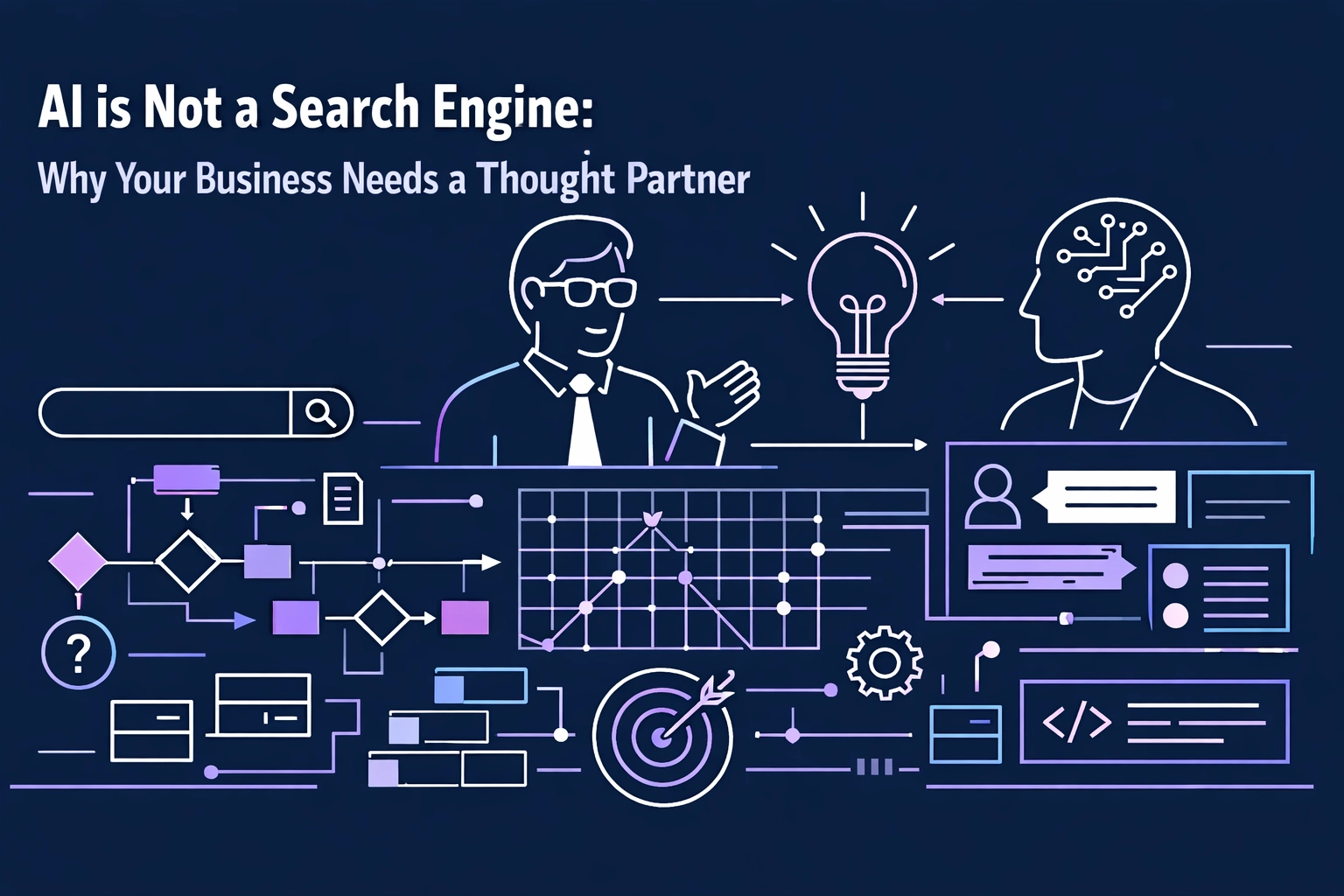
You're using AI wrong.
Not because you're incompetent. Because everyone told you AI was just a better Google. Type in a question. Get back an answer. Move on with your day.
That's not AI strategy. That's information retrieval with extra steps.
Geoff Woods' book The AI-Driven Leader draws a line in the sand: AI is a thought partner, not a search engine. And if you're running a small business drowning in operational overwhelm, this distinction isn't philosophical: it's the difference between treading water and building competitive advantage.
The Search Engine Trap
When you treat AI like Google, you're asking it to fetch information. "What are the best project management tools?" "How do I calculate customer acquisition cost?" "What's the average conversion rate for e-commerce?"
The AI spits back an answer. You copy-paste it into a Slack message or your next deck. Done.
Problem: You just outsourced retrieval, not thinking.
You're still stuck making the decision alone. You're still unsure if the answer applies to your business context. You're still carrying the full cognitive load of strategy on your own shoulders.
Search engines find facts. They don't challenge your assumptions. They don't ask follow-up questions. They don't push back when your thinking has blind spots.
A thought partner does.
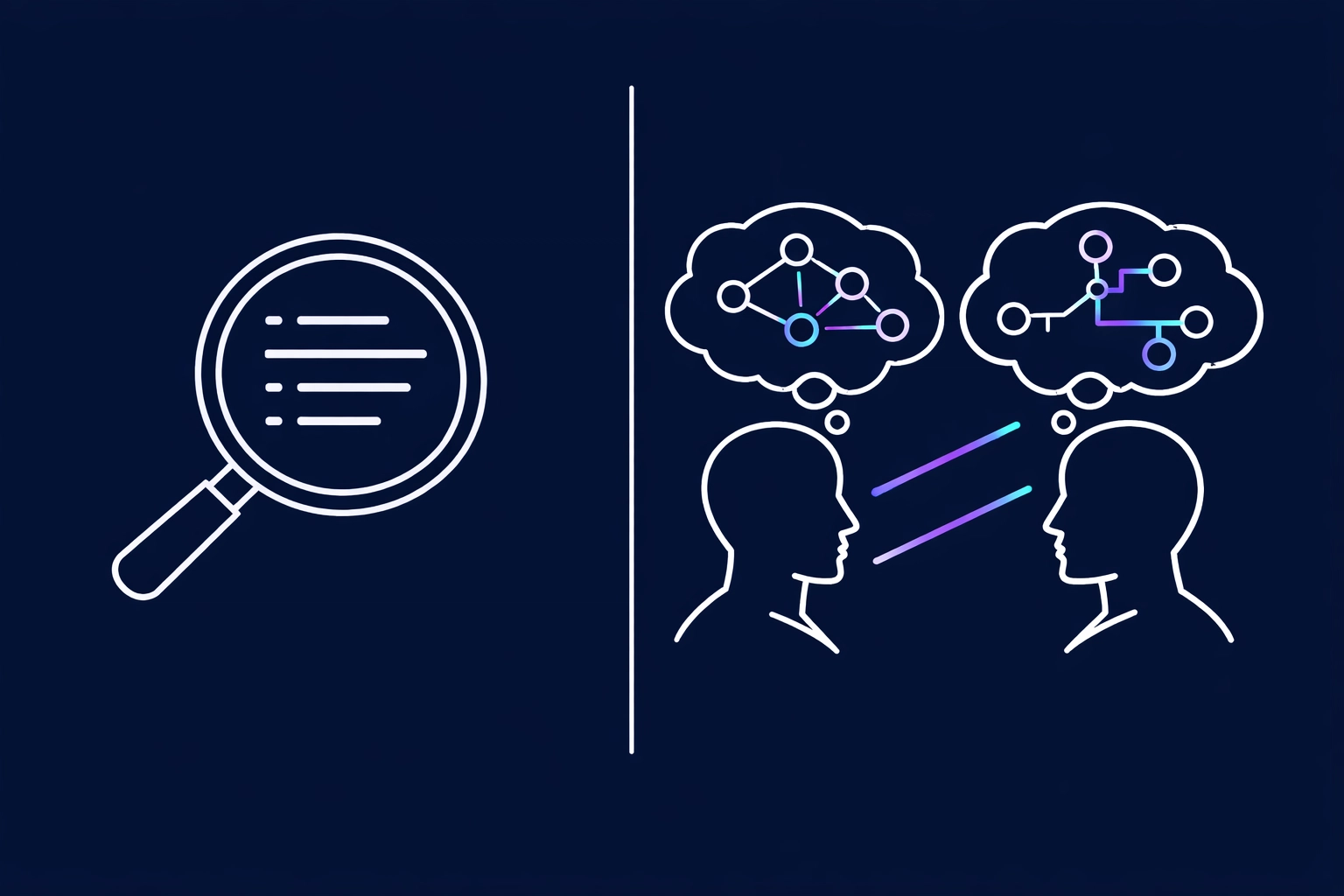
What a Thought Partner Actually Does
A thought partner doesn't just answer questions: it engages with your thinking.
Here's what that looks like in practice:
01. It synthesizes across contexts
You ask about pricing strategy. A search engine gives you SaaS pricing models. A thought partner connects your pricing question to your customer acquisition cost, churn rate, and competitive positioning: then asks which constraints matter most to your business.
02. It challenges your biases
You're convinced you need to hire another salesperson. A thought partner asks: "What evidence do you have that sales capacity is the bottleneck? Could this be a lead quality issue instead?"
03. It role-plays scenarios
You need to have a hard conversation with a co-founder about equity split. A thought partner lets you rehearse the conversation, anticipate objections, and refine your positioning before the real stakes are on the table.
04. It identifies patterns you can't see
You need to have a hard conversation with a co-founder about equity split. A thought partner lets you rehearse the conversation, anticipate objections, and refine your positioning before the real stakes are on the table.
This is strategic leverage. This is what CFOs and consultants get paid $300/hour to provide.
You can get it from AI: if you stop asking it to Google things for you.
The CRIT™ Framework: Your Field Manual
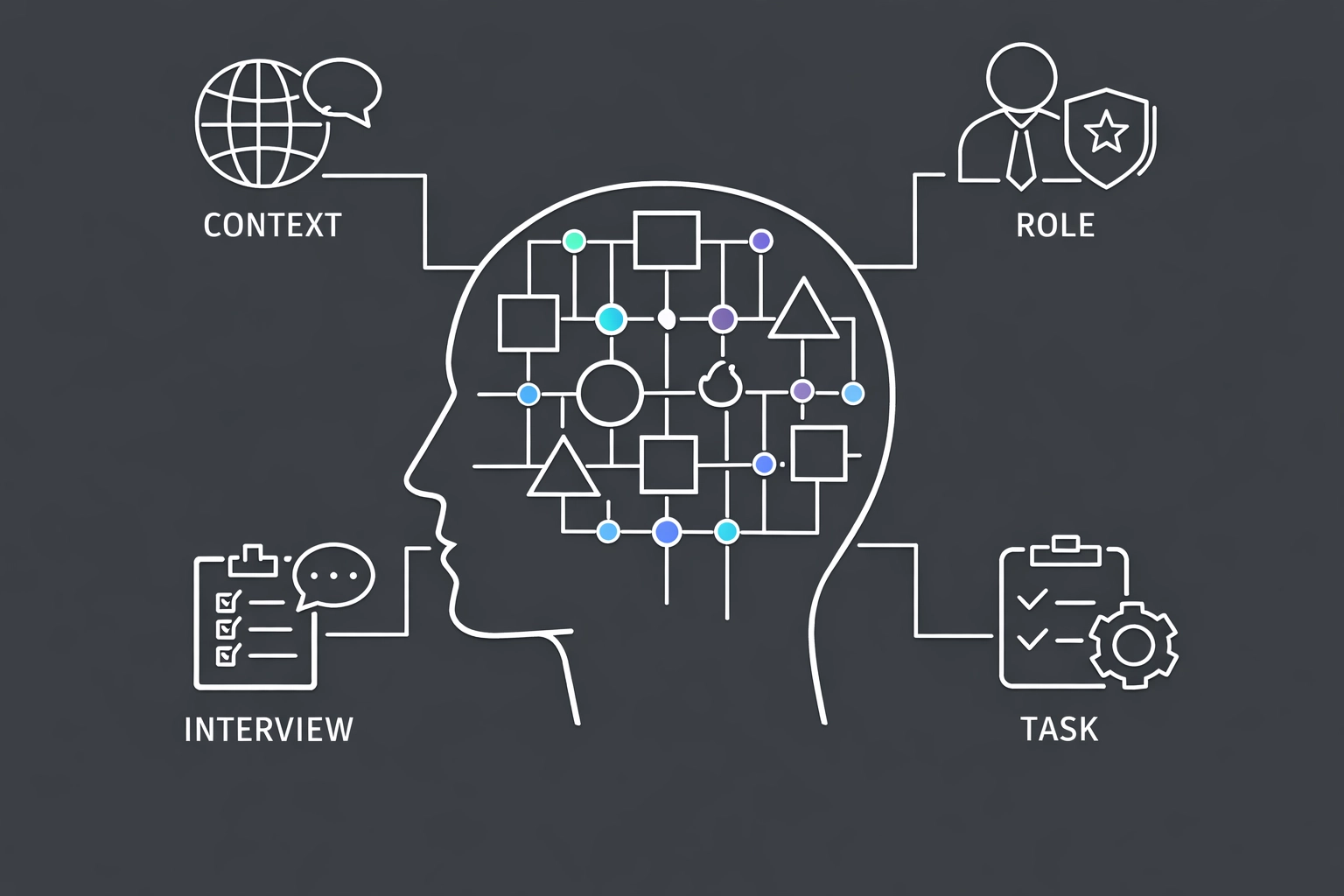
Woods introduces the CRIT™ Framework as the operating system for turning AI into a strategic asset. It's four inputs that transform generic AI output into contextual intelligence.
C – Context
Give AI the situational backdrop. Don't ask "How do I reduce churn?" Ask "I run a $2M ARR B2B SaaS company with 15% annual churn, mostly in our lowest tier. Enterprise accounts renew at 95%. How do I reduce churn?"
Context turns generic advice into specific strategy.
R – Role
Tell AI who it's being. "You're a fractional CFO with 12 years in SaaS companies under $5M ARR." Or "You're a marketing strategist who specializes in local service businesses."
Role dictates perspective. A CFO thinks about P&L. A marketer thinks about CAC and LTV. Same question, completely different insights.
I – Interview
This is the unlock. Don't ask AI for answers. Ask it to interview you.
"Ask me five diagnostic questions before you recommend a solution." Or "Challenge my assumptions about why we're losing deals."
Interview mode forces AI to dig deeper before offering solutions. It surfaces the variables you didn't think to mention.
T – Task
Be specific about what you need. Not "help me with marketing." Instead: "Create a 90-day content roadmap that positions us as AI implementation experts for HVAC companies, including 12 LinkedIn post ideas and 4 long-form blog topics."
Task clarity determines output quality.
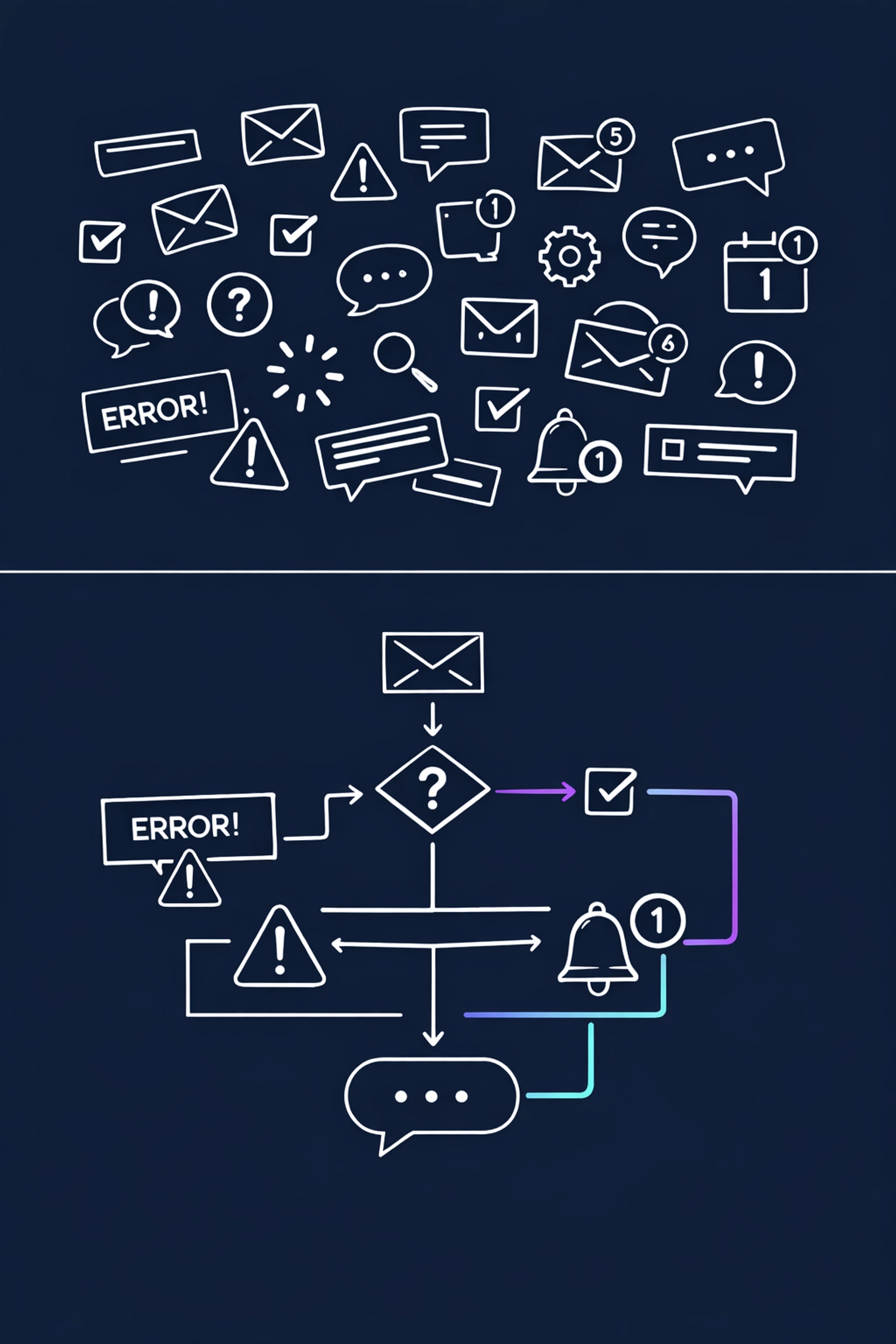
Operational Overwhelm vs. Strategic Clarity
Here's the pattern I see in every small business owner who reaches out to POLR AI:
They're drowning in tactical decisions. Which CRM to use. Whether to hire a VA. How to structure their website. What to post on LinkedIn.
This is operational overwhelm. It feels productive because you're making decisions. But you're not building leverage. You're fighting fires.
Strategic clarity looks different. It's the ability to step back and ask:
- What's the highest-leverage problem I could solve in the next 90 days?
- Which of these tactical decisions actually moves the needle on revenue or margin?
- Am I solving the right problem, or just the most visible one?
AI as a search engine keeps you stuck in operational overwhelm. You ask it tactical questions, it gives you tactical answers, and you stay in the weeds.
AI as a thought partner pulls you into strategic clarity. It forces you to articulate your constraints. It challenges whether you're solving the right problem. It helps you see the forest instead of optimizing individual trees.
Practical Application: Stop Googling, Start Strategizing
Let's make this concrete. Here's how an SMB owner can use AI as a thought partner starting today:
Scenario 01: Decision-Making Under Uncertainty
You're trying to decide whether to expand into a second market or double down on your current one.
Search Engine Approach:
"What are the pros and cons of market expansion?"
Thought Partner Approach:
"You're an experienced business strategist. I'm considering expanding into a second market vs. deepening penetration in my current market. Before recommending either, interview me about my business to understand which path has higher expected value. Ask about revenue, customer concentration, competitive dynamics, and operational capacity."
See the difference? The first gets you a listicle. The second gets you a strategic conversation tailored to your situation.
Scenario 02: Challenging Your Own Bias
You're convinced you need to build a mobile app because your competitors have one.
Search Engine Approach:
"How much does it cost to build a mobile app?"
Thought Partner Approach:
"You're a skeptical product strategist. I believe we need to build a mobile app because our competitors have one. Challenge this assumption. Ask me questions that help determine if this is the right investment or if there's a higher-ROI alternative."
The thought partner forces you to defend your logic before you commit capital.
Scenario 03: Role-Playing Difficult Conversations
You need to tell an underperforming employee they're not meeting expectations.
Search Engine Approach:
"How do I give negative feedback?"
Thought Partner Approach:
"You're an executive coach specializing in difficult conversations. I need to tell an employee they're underperforming. Role-play this conversation with me. Push back on my points if they're unclear or feel accusatory. Help me refine my message until it's direct but constructive."
One gives you theory. The other gives you rehearsal and refinement.
The Strategic Shift: From Retrieval to Partnership
Here's what this shift actually requires:
01. Change your prompts
Stop asking for answers. Start asking for thinking. Replace "What should I do?" with "What questions should I be asking myself?"
02. Provide context habitually
The more AI knows about your business constraints, competitive landscape, and strategic priorities, the more useful its input becomes. Treat it like onboarding a consultant.
03. Use it for pre-mortems
Before making a major decision, ask AI to role-play as your board of directors. "Here's my plan. Poke holes in it. What am I missing?"
04. Iterate in conversation
Don't accept the first output. Push back. Refine. Ask follow-ups. The value is in the dialogue, not the initial response.
05. Apply the CRIT™ Framework consistently
Context. Role. Interview. Task. Make it your default structure for any strategic question.
Why This Matters for Small Business AI Strategy
Most AI consulting focuses on automation and efficiency: having AI execute tasks faster.
That's valuable. But it's not strategic leverage.
Strategic leverage comes from augmenting your decision-making capacity. From having a sparring partner who challenges your thinking. From role-playing scenarios before real stakes are on the table.
Small business owners don't have executive teams. They don't have boards. They make high-stakes decisions in isolation, with incomplete information and time pressure.
AI as a thought partner changes that equation. It gives you access to strategic thinking on-demand, at a fraction of the cost of hiring consultants or fractional executives.
But only if you stop treating it like a better search engine.
The Bottom Line
Search engines retrieve information.
Thought partners generate insight.
If you're still using AI to Google things, you're leaving the most valuable capability on the table. Start using the CRIT™ Framework. Start asking AI to challenge your thinking. Start treating it like the strategic asset it actually is.
Your competitors are figuring this out. The question is whether you'll adapt before they build an insurmountable lead.
Ready to turn AI from a search tool into a strategic advantage? Start with our AI assessment and see where thought partnership can create leverage in your business.